This is usually not a question families ask in advance.
Most parents we work with only start comparing the French school system and the UK curriculum once something feels off:
a drop in grades, a child losing confidence, or a possible school move that suddenly feels much more complicated than expected.
At Tutoright, we see this situation every year. And while both systems are academically strong, they work in very different ways, often in ways parents don’t expect.
Age groups and structure: similar on paper, different in reality
| Age | French system | UK system |
| 3–5 | Maternelle | Nursery / Reception |
| 6–10 | École primaire (CP-CM2) | Primary school (Years 1-6) |
| 11–14 | Collège (6e-3e) | Secondary (Years 7-9) |
| 15–16 | Lycée (Seconde / Première) | GCSEs (Years 10-11) |
| 17–18 | Lycée (Terminale) | A-Levels or IB (Years 12-13) |
On paper, this looks straightforward.
In practice, the pace and expectations are very different.
The French system is linear and centralised: everyone follows the same programme, at the same rhythm.
The UK system becomes selective earlier and offers more flexibility, which can be a relief for some students, and unsettling for others.
Grading: this is where many parents panic
This is one of the most common conversations we have with families.
A child moves from a UK school into the French system, works just as hard, sometimes harder, and suddenly comes home with 11 or 12 out of 20.
Almost every time, the same question comes up:
“Is my child struggling?”
In most cases, the answer is no.
French grading is strict by design:
- 10/20 is a pass
- 12-14 is a good result
- 15+ is already very strong
- 18-20 is exceptional
A 12/20 often corresponds to a solid UK C or B. The scale is different, and the culture behind it is different too.
Brevet vs GCSEs: not the same kind of exam
The Brevet (France)
- Taken at the end of Collège (age 14-15)
- Combines continuous assessment and national exams
- Strong focus on methodology, structured writing, reasoning
- Includes a formal oral exam
The Brevet tests whether a student understands how to think and work within the French system.
GCSEs (UK)
- Taken at age 15–16
- Subject-by-subject exams
- Often include coursework
- Greater freedom in subject combinations
This is why students who switch systems often feel confident in the subject matter, but unsettled by the exam style.
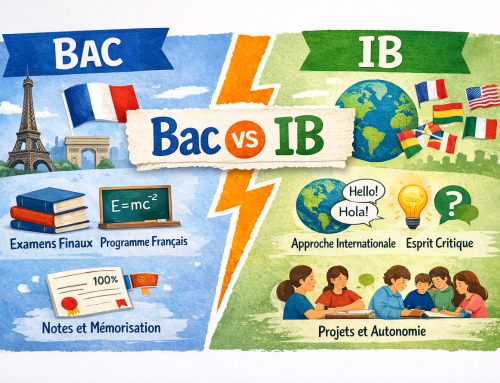
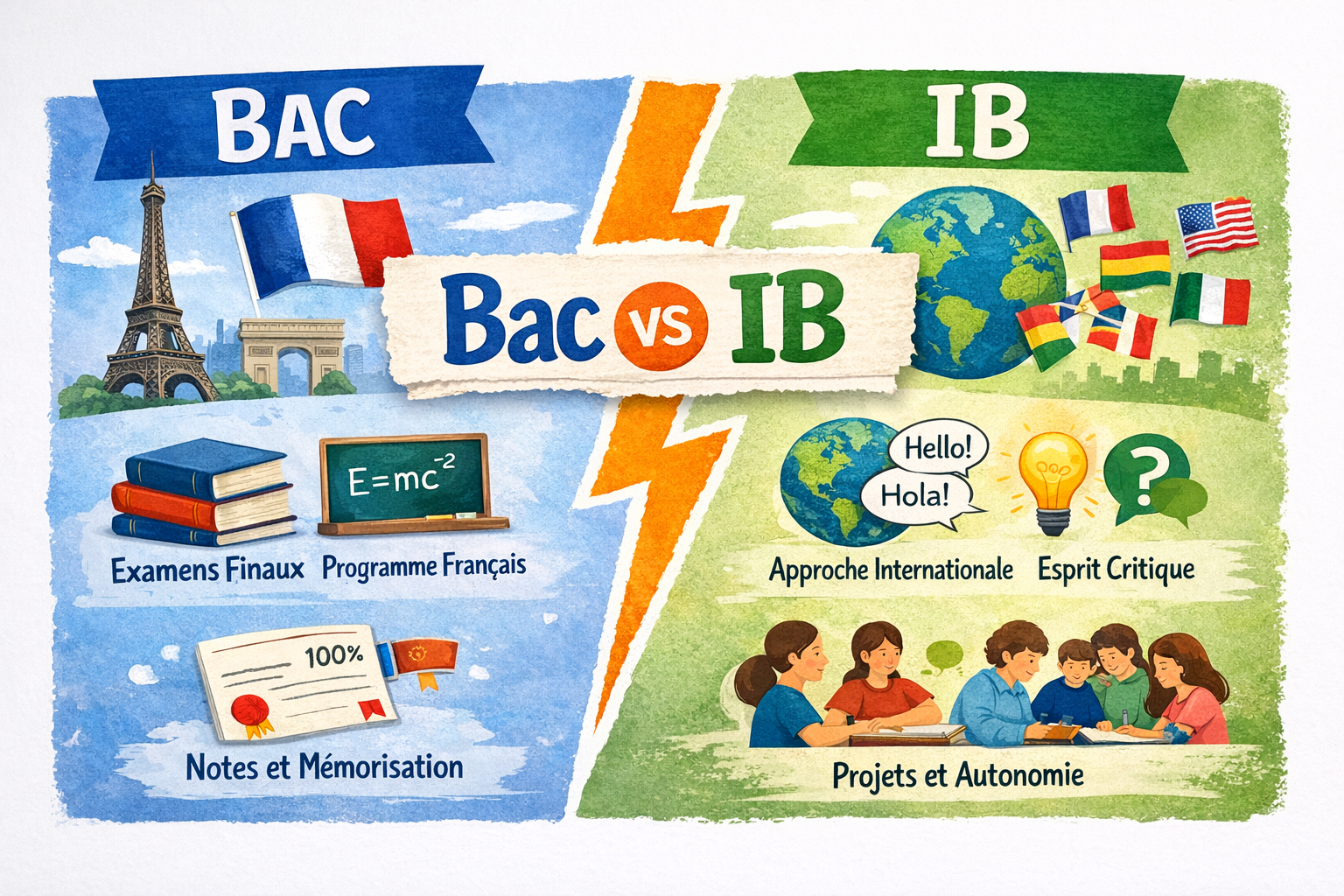
Bac vs A-Levels: breadth or specialisation
French Baccalauréat
Even in the final year, students study several subjects:
- Philosophy (mandatory)
- History-geography
- Two specialist subjects (maths, sciences, economics, etc.)
- Oral and written exams
The Bac values structure, reasoning, and the ability to build a coherent argument.
A-Levels
- Usually three subjects
- Strong specialisation
- Depth over breadth
We often see very capable students struggle when switching systems simply because the thinking style expected is not the same.
UK entry exams: often underestimated by French-system families
This is another surprise for many families coming from the French system.
Entry into the UK system is often selective:
- 11+ (age 10-11): English, maths, verbal and non-verbal reasoning
- 13+ (age 12-13): English, maths, sometimes science and reasoning
- Sixth Form entry (16+): GCSE results, subject tests, interviews
Preparation often needs to start well in advance, especially for students coming from a French academic background.
What this means for your child
When children move between systems, difficulties are rarely about ability.
They usually need help to:
- understand new expectations,
- adapt to unfamiliar writing formats,
- rebuild confidence when grades shift,
- prepare for exams they were never trained for.
At Tutoright, this is exactly where we step in, not to “change” a student, but to help them decode the system they are in.
Final thought
There is no perfect system.
But there is a big difference between a child feeling lost and a child who understands the rules of the game.
Contact Tutoright to discuss bilingual academic support tailored to your child’s path.