There’s a question that comes up regularly in conversations with francophone families in London.
“We’re following the French curriculum… but how does that position our child within the UK system?”
Behind that question, there isn’t doubt about the quality of French education.
There’s another concern:
How is the Bac perceived compared to A-levels or the IB?
Will UK universities view it as equally competitive?
Are we keeping all options open or narrowing them without realising it?
And will we only understand the implications when it’s too late to adjust?
In London, the challenge is understanding how different systems connect and how each pathway shapes future academic possibilities.
Clarity at 14 or 16 can make a significant difference at 18.
Two systems, two academic cultures
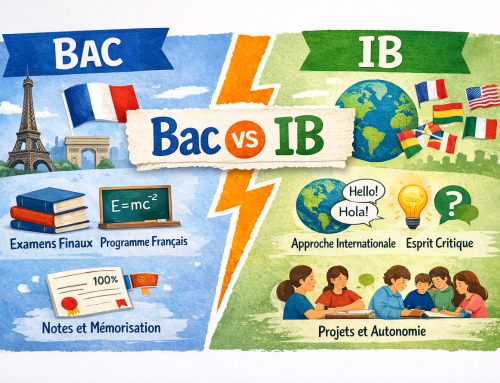
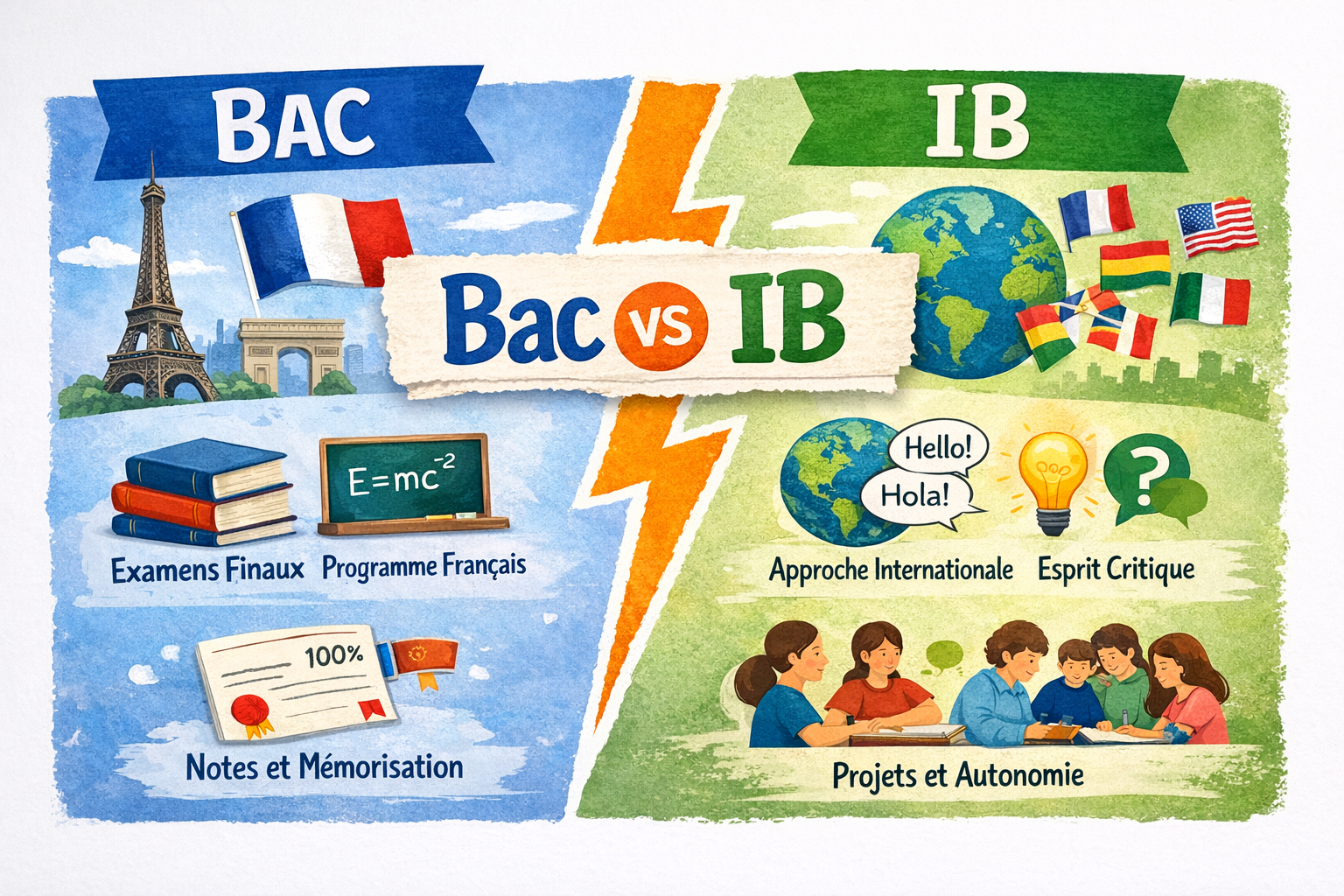
Before looking at individual schools, it’s important to understand that the French and British systems are built on fundamentally different philosophies.
The French system
The French model is structured, centralised and academically rigorous.
It emphasises:
- strong written argumentation
- analytical depth
- broad subject exposure before specialisation
- demanding grading standards
Students are trained to construct structured essays, reason carefully and develop methodical thinking.
Specialisation happens later, typically during the final years of secondary school.
This produces resilient, academically solid students.
But it is not always designed with early university positioning in mind.
The British / international system
The British system works differently.
It is characterised by:
- earlier subject specialisation
- subject-based examinations (GCSE, A-levels)
- strong emphasis on critical thinking and discussion
- structured university admissions processes (UCAS, interviews, subject tests)
Students often begin shaping their academic profile from age 14-16.
This can create clarity and focus early on but it also means decisions are made sooner.
Neither system is inherently superior.
They simply reward different strengths.
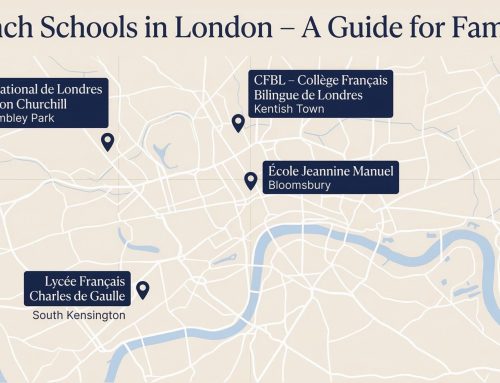
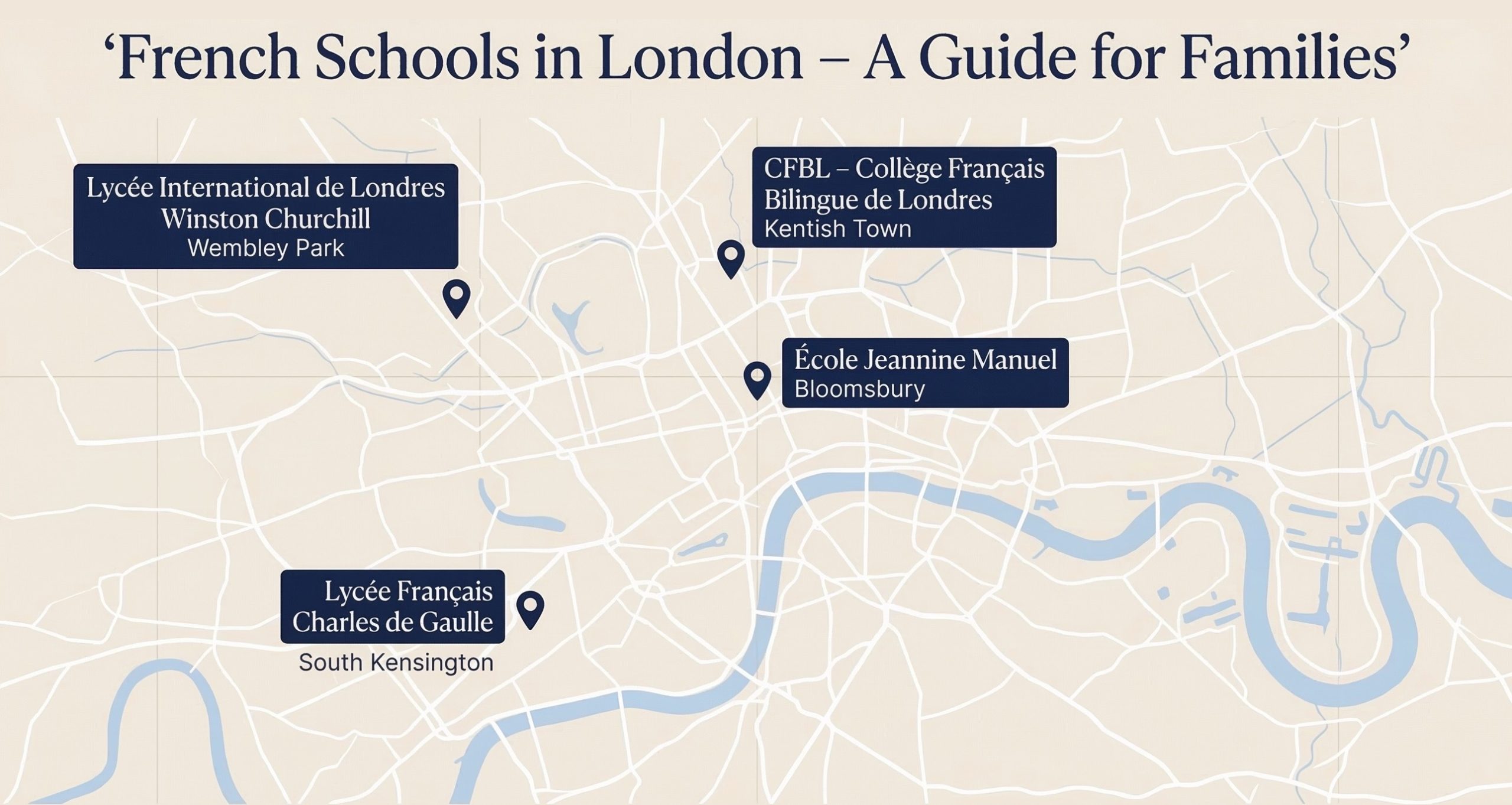
What the main French schools in London actually offer
Lycée Français Charles de Gaulle
One of the largest and most established French institutions in London.
It offers:
- A traditional French pathway leading to the Brevet and the French Baccalauréat
- Plurilingual and international sections
- A European section
- Access to the BFI (Baccalauréat Français International)
- In some cases, IGCSE English and English literature
- Conditional pathways toward the British Section
The school provides internal flexibility.
However, the key decisions often begin around Year 9 or Year 10.
Switching sections later can become significantly more complex.
Lycée International de Londres Winston Churchill
Often associated with the IB, but its structure is more nuanced.
Two distinct routes exist:
French track:
Brevet followed by the French Baccalauréat.
International track:
IGCSE in Year 11, followed by the IB Diploma Programme in Sixth Form.
The choice between Bac and IB is not cosmetic.
Students who are highly confident in academic English may thrive in the IB pathway.
Students who excel in structured written reasoning may perform exceptionally within the French Bac system.
École Jeannine Manuel
Highly academic and internationally oriented.
It combines:
- French Bac / BFI
- IGCSE
- IB Diploma
- Selected Advanced Placement (AP) courses as additional academic enhancement
It is important to clarify that AP courses strengthen a university application but do not constitute a standalone American diploma.
Jeannine Manuel is often chosen by families wishing to maintain UK, French and international options simultaneously, with a correspondingly high level of academic demand.
CFBL (Collège Français Bilingue de Londres)
CFBL educates students up to Year 9.
After that, families must decide between:
- Continuing in the French system (Bac / BFI)
- Moving to an international IB school
- Entering the British system in Year 10 to prepare GCSEs
Transitioning into the British system is possible, but preparation is crucial, particularly in academic English and GCSE exam methodology.
Waiting until the end of Year 9 to reflect on this decision can create unnecessary pressure.
Common misunderstandings
Certain patterns appear repeatedly:
- Assuming that the Bac and IB are interchangeable.
- Underestimating the importance of GCSE English for entry into some Sixth Forms.
- Believing that strong academic results in the French system automatically translate into British exam success.
- Attempting to switch systems too late, without targeted preparation.
Bridges exist between systems.
But they are smoother when planned in advance.
What does this mean in practical terms?
A student taking Maths and Physics specialities in the French Bac can be highly competitive for UK universities.
An IB student taking Higher Level Mathematics and Economics presents a profile that is immediately readable for a Russell Group institution.
A student without GCSE English may face administrative barriers, even if academically strong in other subjects.
These details may seem technical.
They are often decisive.
Checklist: before Year 9, Year 11 or Sixth Form
Before making a strategic decision, consider the following:
-Is my child’s English genuinely academic (essay writing, analysis, exam technique)?
-Does my child perform better in highly structured written reasoning or in discussion-based analytical environments?
-Are we aiming primarily for UK universities, France, or a broader international trajectory?
-Are we comfortable with earlier subject specialisation if choosing the British pathway?
-Have we checked specific subject requirements (e.g. GCSE English, Higher Level Maths)?
-If considering a system transition, have we planned at least 12-18 months of preparation?
In London’s educational landscape, small decisions at 14-16 can shape options at 18.
Final thought
There is no universally “best” pathway.
There are pathways that align better with certain profiles, ambitions and learning styles.
Understanding the structure, timing and implications of each system allows families to make informed and calmer decisions.
And often, clarity reduces more stress than any additional lesson ever could.